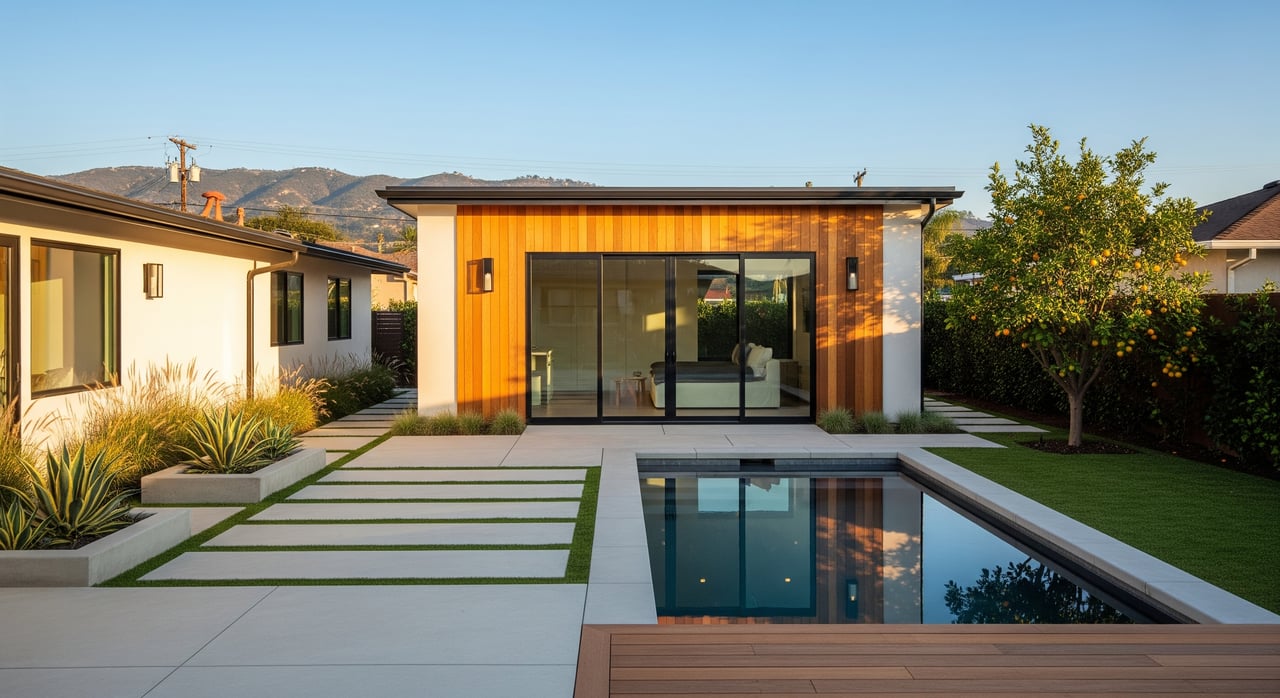
Thinking about adding an accessory dwelling unit to your Costa Mesa property? You are not alone. Many owners want extra income, flexible space for family, or a smarter long-term play. This guide breaks down the legal basics, local permitting, site and utility needs, ballpark costs, rental potential, and ROI so you can plan with confidence. Let’s dive in.
ADU basics in California
California has a strong state framework that requires cities to allow ADUs that meet objective standards. State law calls for ministerial approvals rather than subjective design review when your plans comply. In plain terms, if you meet the rules, the city should issue your permit.
State law generally requires a ministerial decision on a complete ADU application within about 60 days. It also limits certain development standards and impact fees, with fee relief often tied to smaller unit sizes. To confirm definitions and size thresholds for ADUs and junior ADUs, review guidance from the California Department of Housing and Community Development and the ADU statutes in Government Code sections 65852.2 and 65852.22.
Costa Mesa rules and permits
Costa Mesa implements state ADU law through objective local standards and a ministerial review process. You will submit a complete package that typically includes a plot plan, floor plans and elevations, utility and parking plans, materials and landscape notes, and the city’s application forms. Plan check and inspections run through the Planning and Building & Safety divisions.
Expect the city to verify setbacks, height, lot coverage, design compatibility, parking, and utilities. Costa Mesa may allow reduced side and rear setbacks for detached ADUs, although you should confirm the exact numbers with the Planning Division. If your property sits in a special overlay such as a floodplain or coastal-related area, expect additional requirements.
What to confirm with the City
- Setbacks, height, lot coverage, and whether garage conversions are allowed on your lot.
- Whether your location triggers extra rules for flood zones or other overlays.
- Impact fees and utility connection requirements, including whether smaller ADUs qualify for fee reductions.
- Water and sewer meter needs, possible sewer lateral work, and related fees.
- Short-term rental rules, since ADUs may be subject to local restrictions and registration.
Site and utility basics
Your lot and existing structures drive both feasibility and cost. Corner or irregular lots can add design complexity. Smaller parcels may need careful layout to meet setbacks and preserve outdoor space. Converting a garage or interior area is usually the least expensive approach, while a new detached unit is often the most costly.
Topography and soils matter. Cut and fill, retaining walls, and slope stabilization raise costs. Portions of Costa Mesa are low-lying and may fall within FEMA flood zones. If you are in a floodplain, elevated foundations or floodproofing can be required, which adds budget and time. Large trees, required protection zones, and landscaping adjustments may also affect design.
Utilities and hookups
- Water and sewer: Most Costa Mesa homes tie into municipal systems. Your ADU may need new or upsized connections or approval to share existing lines. New water meters or sewer lateral upgrades increase cost.
- Electrical: If your main panel is maxed, you may need a larger service or a separate meter, which requires utility coordination and can be pricey.
- Gas, HVAC, and mechanicals: Ductless mini-splits are popular for compact cooling and heating. Choose efficient water heating to save space and utility costs.
- Stormwater and paving: New hardscape can trigger local stormwater requirements, so plan drainage early.
Pre-permit checks
- Title and easement review.
- Water and sewer location and capacity confirmation.
- FEMA flood map review and any local floodplain overlays.
- Preliminary soils or engineering if you have slopes or unusual soil conditions.
- HOA or historic-district rules, if applicable.
Design that rents in Costa Mesa
Your design choices shape both cost and rentability. Efficient studios and one-bedroom layouts in the 400 to 700 square foot range work well for long-term renters and multigenerational living. In-unit laundry and a full kitchen increase appeal.
Indoor-outdoor flow is a plus. Add a small private patio or yard, and consider larger sliders or windows for light. Use durable, low-maintenance finishes such as vinyl plank flooring and quartz or laminate counters. Reliable cooling, solid insulation, and good ventilation matter for year-round comfort. If possible, plan safe, clear access and on-site parking. If parking is tight, include secure bike storage and highlight transit access.
What it costs to build
Costs vary by scope, finishes, and site complexity. Use these Orange County ranges as a starting point, then get local bids.
- Garage conversion or JADU: about $60,000 to $150,000 depending on structure condition and scope.
- Attached ADU: about $120,000 to $300,000 for interior additions or connected units.
- Detached ADU: about $150,000 to $450,000+ for standard new builds. Many projects land in the $250 to $400 per square foot range, and complex or high-end designs can exceed $500,000.
Key cost drivers
- Type of ADU: conversion is usually the least expensive, detached the most.
- Size and finishes: higher square footage and upgraded finishes raise the total.
- Site work: grading, retaining, utilities, and hardscape can add up.
- Fees and upgrades: plan check, inspections, impact and connection fees, plus any meter or transformer work.
- Market conditions: labor and material prices shift with demand.
Fees to budget separately
- Planning and building fees including plan check and inspections.
- Impact and utility connection fees for water, sewer, and related agencies.
- Fire department, address, and utility agency charges where applicable.
- Design team costs for architecture, structural and civil engineering, soils, and energy compliance.
- Site work such as demolition, grading, drainage, and concrete.
- Contingency of 10 to 20 percent for unforeseen conditions.
- Financing costs if you use a construction loan.
- Property tax increases from the new construction assessment.
Will it rent in Costa Mesa
Costa Mesa sits in a high-demand, coastal-adjacent area with access to jobs in Irvine and Newport Beach, major shopping and arts venues, and the beach. These anchors support steady demand for smaller, well-located rentals.
To price your ADU, gather 30 to 90 day rental comps from local property managers and MLS-based rental data, and supplement with widely used rental platforms. Factor in size, finishes, location, parking, and whether utilities are included. Typical ADU renters include single professionals, couples, small families, students or interns, and extended family members.
Short-term rentals can show higher gross income but come with higher management costs and stricter city rules. Costa Mesa regulates short-term rentals, so confirm whether ADUs qualify and what registration, inspections, and local taxes would apply before planning a vacation-rental strategy.
ROI examples for planning
Here are two simplified scenarios to frame expectations. Actual returns depend on your financing, vacancy, maintenance, and taxes.
Example A — Lower-cost conversion
- Build cost: $100,000
- Monthly rent: $2,000, or $24,000 per year
- Operating expenses at 30 percent: $7,200, net operating income approx. $16,800
- Simple cap rate on build cost: about 16.8 percent
- Payback period before financing: roughly 6 years
Example B — Detached new ADU
- Build cost: $300,000 for a 600 square foot unit
- Monthly rent: $2,400, or $28,800 per year
- Operating expenses at 30 percent: $8,640, net operating income approx. $20,160
- Simple cap rate on build cost: about 6.7 percent
- Payback period on NOI basis: about 14.9 years
These are planning examples. Your pro forma should include construction loan interest, potential property tax changes, insurance, maintenance reserves, management, and vacancy.
Step-by-step process
- Preliminary feasibility
- Review Costa Mesa setbacks, height limits, lot coverage, and overlay zones with Planning.
- Confirm water and sewer capacity and the likely need for new meters or laterals.
- Budget and scope
- Choose conversion, attached, or detached and set a target size.
- Define finishes and create a rough budget using the ranges above.
- Speak with local contractors to validate cost and schedule.
- Pre-application
- Visit or contact the Planning counter for the ADU intake checklist and objective standards.
- Order soils, surveys, or utility locates if needed.
- Design and permitting
- Prepare a full set: site plan, floor plans, elevations, structural, civil, and energy docs.
- Submit for ministerial plan check and respond to corrections promptly.
- Construction
- Schedule inspections and coordinate trenching, meters, and hookups.
- Complete punch list and obtain final occupancy.
- Post-construction
- Update insurance and ask the assessor about the new-construction assessment.
- If renting, set market rent, prepare lease documents, and register for any local rental requirements.
Risks and tips
- Rules change. Verify current Costa Mesa standards, fees, and timelines before you finalize plans.
- Compare multiple contractor bids with clear scopes and contingencies.
- Include non-construction costs in ROI: design, permits, utilities, taxes, insurance, and financing.
- If you are considering short-term rentals, confirm eligibility and local tax and inspection requirements.
- Create a 10-year pro forma that models rent growth, maintenance, financing, and a sale scenario.
Next steps and local resources
Start with the City of Costa Mesa Planning Division and Building & Safety for the latest ADU handouts, checklists, and fee schedules. Check with local utilities for water, sewer, and electric service needs, and review FEMA flood maps if your site is low-lying. For taxes, consult the Orange County Assessor about how new construction affects your bill.
Want help aligning the plan with your property value, rental comps, and resale strategy? The team at the Summer Perry Group can help you weigh design and scope, connect you with local ADU-experienced pros, and model rentability and long-term value across Costa Mesa and the broader coastal market.
FAQs
How long does the Costa Mesa ADU permit take?
- State law generally calls for a ministerial decision within about 60 days on a complete application, and your total timeline depends on plan-check cycles and your responsiveness.
What are Costa Mesa’s ADU size and setback limits?
- Costa Mesa applies objective standards for size, height, and setbacks, and you should confirm the current numbers and any overlay rules directly with the Planning Division.
What fees should I expect for an ADU in Costa Mesa?
- Plan for planning and building fees, impact and utility connection fees, possible meter or lateral work, design team costs, and a 10 to 20 percent contingency.
Can I use an ADU for short-term rentals in Costa Mesa?
- Costa Mesa regulates short-term rentals and may restrict ADU use, so confirm eligibility, registration, inspections, and any local taxes before pursuing STR income.
How much rent can a Costa Mesa ADU earn today?
- Rents vary by size, finishes, parking, and location; check 30 to 90 day local comps through MLS-based rentals and property managers for the most current data.
Will building an ADU increase my property taxes?
- New construction is typically added to your assessed value in California, so expect some increase and confirm specifics with the Orange County Assessor.
What is the most cost-effective way to create an ADU?
- Converting an existing garage or interior space is usually cheaper than building a new detached unit, especially if the structure is sound and utilities are nearby.
What financing options should I consider for an ADU?
- Owners often compare cash-out refinances, construction loans with a permanent takeout, and HELOCs, balancing interest cost, timeline, and total project budget.