"It's a band-aid that can be very effective." That is how Newport Beach's mayor pro tem described the concrete cap the city voted 6-0 to add to Balboa Island's seawall, a stopgap while the city saved toward a full rebuild it still hasn't fully costed out. When the city that owns the wall calls its own fix temporary, a buyer signing escrow on the house behind that wall deserves a straight answer about who pays for whatever comes after the band-aid.
That question sits underneath almost every waterfront listing in Newport Harbor, and most buyers never ask it because the word "waterfront" implies a kind of ownership the deed doesn't always deliver. On Balboa Island, Lido Isle, Linda Isle, and stretches of the Balboa Peninsula, the dock behind the house, the seawall in front of it, and in one specific pocket of the harbor, the ground the house sits on, can each belong to someone other than the person selling you the home. Figuring out which one applies to a given property is not a formality. It changes what a lender will finance, what an appraiser will value, and what shows up on a tax bill years after closing.
Three Things People Call "Waterfront"
Newport Harbor's residential shoreline was built out through decades of fill and dredging, and the paperwork from that era still governs who controls what today. A buyer looking at three outwardly similar bayfront homes could be looking at three different ownership structures.
Structure | What you actually own | Who holds the underlying interest | What it means for financing |
|---|---|---|---|
Fee simple with private dock | House, lot, and dock structure | You, outright | Standard underwriting |
Tidelands leasehold (dock, slip, mooring) | House and lot; dock sits on leased water bottom | City of Newport Beach, as trustee for the State of California | Lenders review lease terms, renewal rights, and rent escalation before approving |
Land lease (Lido Peninsula) | The house only | A private landowner, separate from the seller | Loan terms depend on years remaining on the ground lease |
Every one of these can be marketed as "waterfront." Only one of them hands you a deed that covers everything you see from the dock.
The Water Under the Dock Isn't Automatically Yours
Most of the waterways in Newport Harbor are tidelands, owned by the State of California and held in public trust. Under the Beacon Bay Bill of 1978, the state granted the City of Newport Beach trusteeship over most of that harbor, which makes the city, in its own words, the "landlord" collecting rent on behalf of the state for private use of a public asset. Docks, slips, moorings, and marina space in Newport Harbor commonly sit on this leased ground, not on land the homeowner owns outright.
That distinction rarely shows up on a listing sheet. It shows up in a preliminary title report, in exceptions for tidelands grants and sovereign land, and later in an appraiser's questions about lease term, rent schedule, and what happens to the dock structure if the lease isn't renewed. A short remaining term or a steep rent escalation clause can make an otherwise identical property harder to finance and slower to sell than a comparable home with a fully private dock.
The city's own harbor charges page is explicit that this rent is not a tax, it's a fair-market-value charge for private use of public tidelands, and the revenue is legally required to go back into tidelands maintenance rather than the general fund. That last part matters for the seawall conversation, because it means dock and mooring rents are one of the funding sources the city draws on for harbor infrastructure, alongside general fund dollars and capital bond programs.
The One Place Where You Rent the Ground Itself
Lido Peninsula is a different situation entirely, and it has nothing to do with the state or the tidelands trust. Homes there sit on land owned by a private landholder, and the resident pays a monthly land lease on top of any mortgage payment. As of Multiple Listing Service data from September 25, 2026, one Lido Peninsula listing was priced at $775,000 with a land lease of $3,237 a month, a separate line item from principal and interest that a buyer comparing this price against a fee-simple bayfront home elsewhere in Newport Beach would need to add back in before the comparison means anything.
Land leases like this typically run for a fixed term with a defined expiration, and lenders want assurance that the remaining lease period extends well past the payoff date of the loan. That underwriting standard is one reason land-lease homes often carry a lower purchase price than comparable fee-simple properties nearby. The lower number on the listing isn't a discount so much as a different math problem, one where the monthly lease payment is doing work that principal paydown does on a fee-simple mortgage, without building the same equity.
A Wall the City Itself Calls Temporary
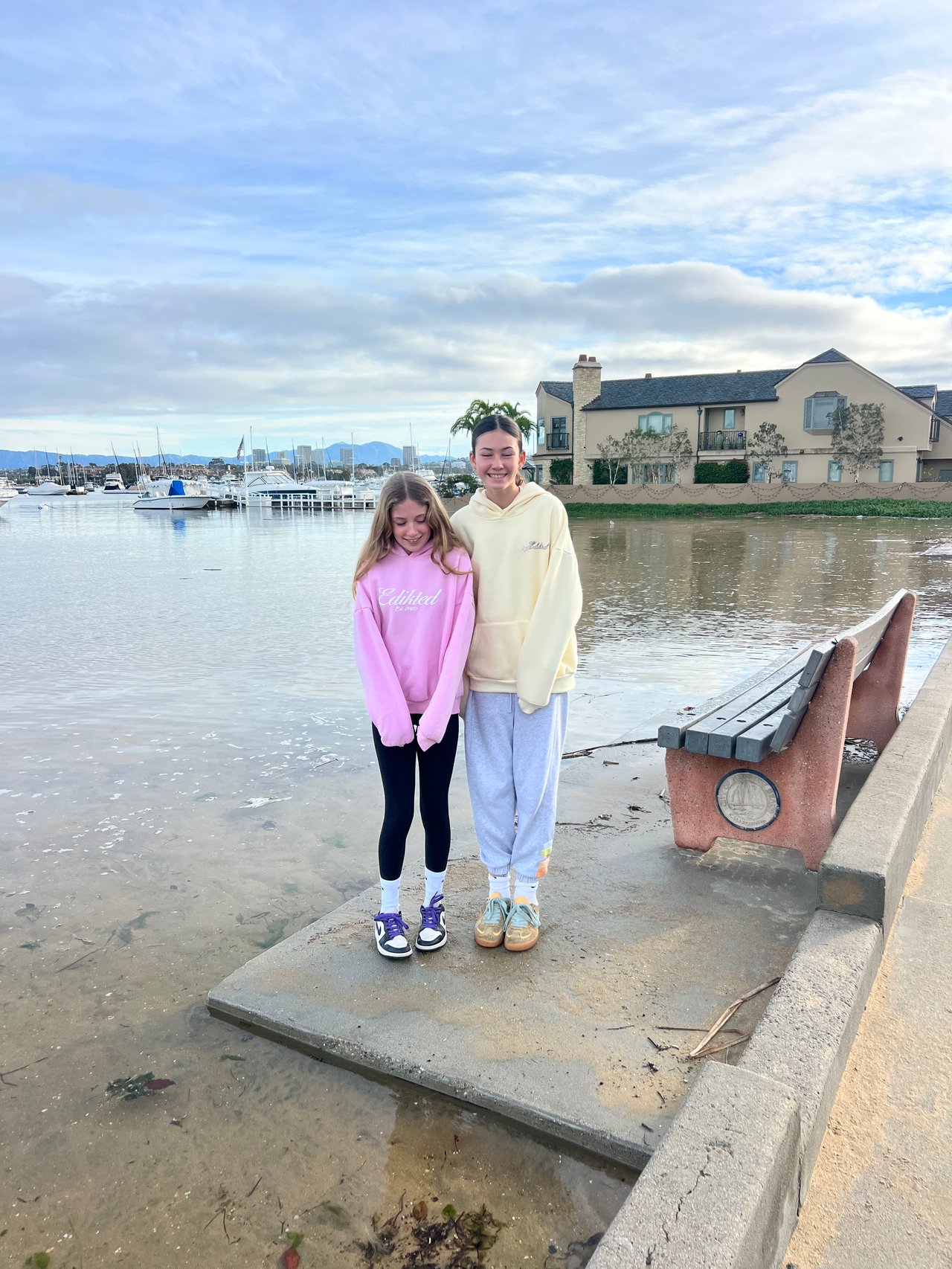
Balboa Island's seawall dates to the early to mid-1900s, and by 2017 the city was facing regular flooding from king tides and storm surges pushing water over the top. The council's fix, approved that August, was a 9-inch concrete cap: 8.5 feet on the north side, 9 feet on the south side, because the south side takes the direct hit from storm surge and wave action. The engineer's estimate ran $1.5 to $2 million, construction moved in sections of 10 to 15 working days each, and the work paused over the December holidays before finishing. City staff were candid that the cap was a near-term measure meant to buy time while the city saved for a larger, far more expensive replacement, one that would go deeper into the water and take years to plan.
That larger project has a name and a design now for one specific spot. Environmental review documents for the Collins Island Bridge Replacement Project describe plans to raise the seawall's top-of-wall coping elevation from about 9 feet to 11 feet on the North American Vertical Datum of 1988, with a future cap extension designed to reach 14 feet if sea levels rise as projected. The project also flags that some of the existing concrete sheet piles have corroded tie-back anchors and no longer provide adequate support, which is the kind of structural detail that doesn't show up in a walk-through. Getting there requires sign-off from the city, the California Coastal Commission, the U.S. Army Corps of Engineers, and the Santa Ana Regional Water Quality Control Board, a permitting stack that explains why harbor infrastructure projects here move in years, not months.
How the City Is Budgeting for Seawall Work
Cost planning for this work is still taking shape. In a preliminary look at the fiscal 2026-27 capital improvement program presented to the council on March 10, 2026, city staff outlined a roughly $95 million program that explicitly flagged seawalls and the Balboa Yacht Basin project among the big-ticket items still needing clearer long-range cost estimates, and council members and residents asked for more detail before committing. Because long-range cost estimates for large items like seawalls are still preliminary at this stage of the city's budget process, a buyer evaluating a specific bayfront parcel can reasonably treat any current wall condition as a snapshot and allow for the possibility of a future assessment.
Before You Remove Contingencies
A few questions answer most of what matters, and none of them require guessing:
- Pull a full preliminary title report and read every exception for tidelands grants, sovereign land, leases, and easements, not just the summary page.
- Ask directly whether the dock or slip is on a city or state lease, and if so, get the remaining term and any rent escalation schedule in writing.
- If the property is on Lido Peninsula, get the land lease's expiration date and confirm your lender is comfortable with the years remaining before you waive your loan contingency.
- If the property sits in a common-interest community with shared docks or a shared seawall, request the HOA's reserve study and recent meeting minutes for any planned marina or wall assessments.
- Confirm whether the specific seawall segment protecting the property is city-owned, in which case upgrades route through the capital improvement program, or privately owned, in which case the current homeowner is responsible for its condition today.
A Few Questions Worth Settling Early
Does every waterfront home in Newport Beach carry a land lease? No. Land leases are specific to communities like Lido Peninsula, where a private entity owns the ground beneath the homes. Most bayfront homes on Balboa Island, Lido Isle, and Linda Isle are fee simple at the house and lot level, even when the dock itself sits on a tidelands lease.
If the seawall in front of my house needs work, am I the one paying for it? It depends on ownership of that specific wall segment. Walls within a private lot are typically the owner's responsibility to maintain. Walls the city owns, like the Balboa Island seawall addressed in the 2017-2018 capping project, get upgraded through the city's capital programs, funded in part by general fund dollars, tidelands revenue, and bond financing.
Can I get a standard mortgage on a home with a leasehold dock? Often yes, but expect more document review than a straightforward fee-simple purchase. Lenders and appraisers look closely at lease term, renewal rights, and rent schedule, and a short remaining term can affect both loan terms and resale value down the line.
Waterfront in Newport Beach is a real thing to want and a real thing to buy well. It just requires reading past the word on the listing sheet to the paper underneath it. The Summer Perry Group pulls that paper before you write an offer, not after, so the only surprises left are the ones you'll enjoy from the dock.